We need comprehensive reform that leads to the realization of the citizens’ economic, social, health and educational aspirations – Abu-Ghazaleh
AMMAN --- July 26, 2012 --- Former Prime Minister HE Mr.Ahmad Obeidat addressed important national issues relating to political reform, the National Chater in addition to combating corruption in Jordan in an open session organized by the Economic Policy Development Forum (EPDF) and Talal Abu-Ghazaleh Business Forum.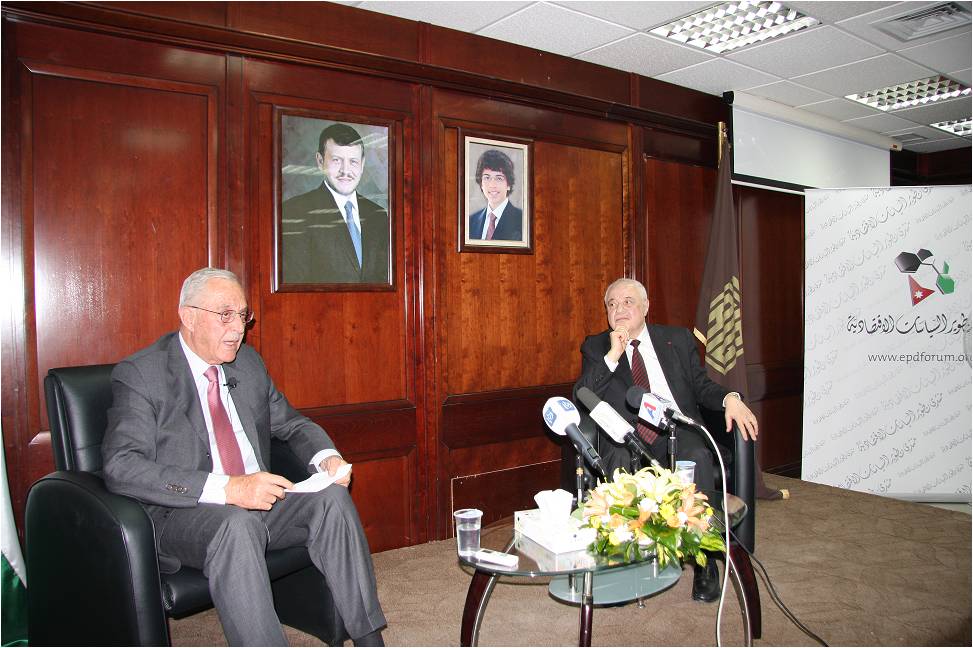
Mr.Obeidat's lecture was attended by a host of politicians, thinkers, community leaders, media and diplomatic missions’ representatives and many others.
Introducing the speaker, Dr. Talal Abu-Ghazaleh, chairman of Talal Abu-Ghazaleh Organization said: “We need comprehensive reform that leads to the realization of the citizens’ economic, social, health and educational aspirations and needs.”
He added that the required reform should not only cover political areas, but it should meet the other daily needs and requirements of the citizens as well, including pressing economic and social issues.
Mr.Obiedat started by defining what Jordanians mean by reform at this stage, by saying “it’s the liberation of the general performance of the country and its constitutional institutions from the dominance of any individual or political party or group on the decision making process and authority.”
This would be achieved, according to Obeidat, by adhering to the rules of law, and by giving the people of Jordan real chance in practicing their natural and constitutional rights in electing their representatives, choosing a cabinet that is capable of shouldering its responsibilities, respecting the people and their choices, and giving them the chance of real participation in making and monitoring the decisions regarding their life within an institutional framework.
He added; “The visions and means vary, but we believe that comprehensive reform is the way and the answer. We believe in progression with respect to some major issues in a way that guarantees process but should not be hindered by the constitutional and the administrative fluctuations we face these days.”
The Charter’s Umbrella
Mr. Obeidat described the circumstances within which the first National Charter in 1928 was created, as the first political and national document with a specified program. He referred to it as a political milestone in the history of the national and political struggle that defined the basic rules of the country. He said that history repeated itself by the issuance of the National Charter of 1990 that specified the country’s political guidelines towards governance based on the rule of law.
“There was hope that the Charter provisions would prompt the state to initiates defined plans for all matters covered in the Charter, which was the result of national consensus by all political and social components.” He said that we can go back with our political and legislative practices to the Charter, as a reference document as was the 1928 charter, while taking into consideration changing times and circumstances.
He explained that this approach at a time where everyone is calling for reform, should enhance our optimism and protect our society from frustration that could lead to violence.
The Fear and Apprehension Cycle
Mr. Obeidat informed his audience that since 1993, the state resorted, in dealing with public affairs, political and economic crises and tension, to a short-term equation of (fear and apprehension); “fear from any change that might lead to reducing the regime’s authority. This is an innate behavior that I don’t object to but I strongly criticize,” Mr.Obeidat said.
He added that fear of change and fear of anticipation of possible dominance of a party or a group on the affairs of the state, under any title, is condemned with any of its consequences. He further said that Jordan is located in a politically and geographically exposed environment where on one side lies the Zionist occupation of Palestine and the Israeli crimes against the Palestinian people; leading to Oslo and Wadi Araba agreement; then the collapse of Iraq and its impact on us in Jordan; then the developing events in Syria and Lebanon; and finally the accumulating wealth in the Gulf, of which Jordan is deprived for sad and dangerous reasons.
The Danger of Corruption
Obeidat said that it is clear that we face lots of problems, and with respect to the financial crisis, it’s not a secret that borrowing from domestic and world markets continues and budget deficit continues to worsen. He referred to the emergence of a group that has been able to blackmail the regime and the successive governments by functioning in every part of the state.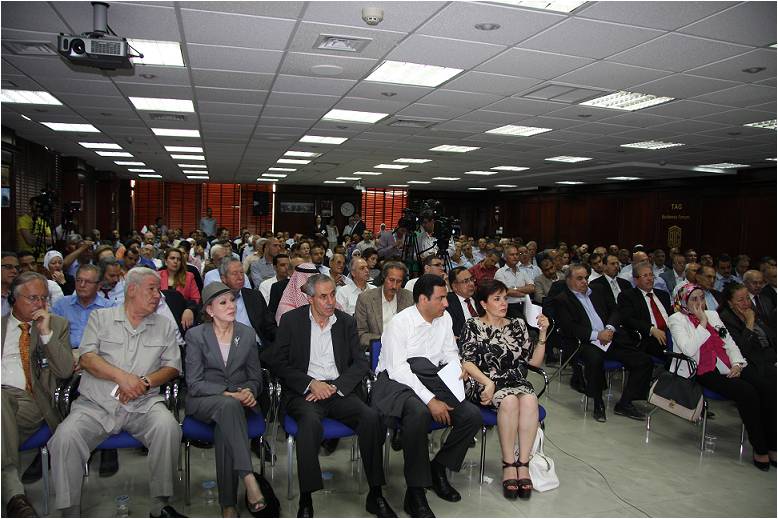
He also called on Jordanian intellectuals and opinion leaders, to take their moral, national and religious responsibilities, by sincerely expressing their points of view away from personal interests; emphasizing that this is a serious responsibility, and the people must realize the situation they are in and call for the recognition of their rights by peaceful means. He also confirmed that the higher education institutions bear a great responsibility in this matter.